


Preparing Your Retirement Portfolio for a Grizzly Bear Market, Ep #279
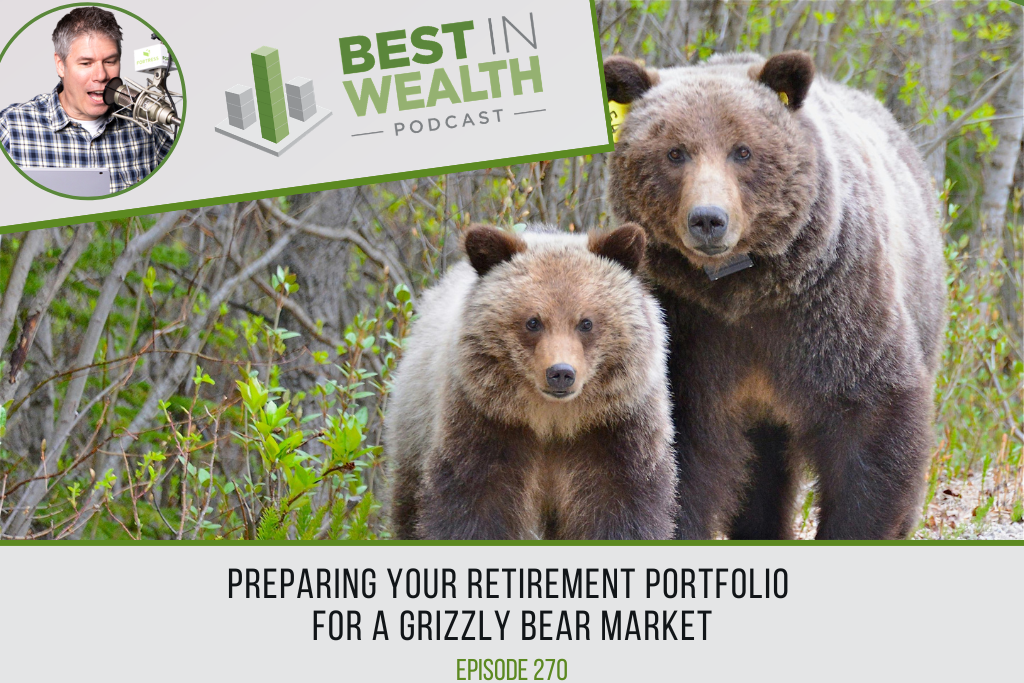
Are you ready for the next grizzly bear?—not the animal, but a major market downturn. He discusses the history of market corrections, bear markets, and the rare but devastating grizzly bear markets, illustrating why it’s crucial to evaluate your portfolio’s risk level during strong market conditions—not during times of crisis. Whether you’re approaching retirement or still in your wealth-building years, this episode will prompt you to reconsider your risk tolerance, portfolio diversification, and readiness for inevitable market storms.
Outline of This Episode
- [03:34] Importance of communicating about conflict before it arises
- [06:27] Discussing market downturns and returns
- [10:16] Understanding Market Corrections
- [11:31] S&P 500 correction frequency
- [16:51] Assessing portfolio risk levels
- [18:01] Understanding risk and portfolio deviations
- [24:03] Preparing for market downturns
- [25:11] Preparing for market downturns
The Importance of Talking About Risk—Before the Downturn
Much like in relationships, it’s best to address potential conflicts before they arise; investors address risk before markets turn volatile. Re-evaluating your comfort with risk and your portfolio’s construction when things are calm puts you in the driver’s seat. Waiting until a downturn hits can leave you reactionary and vulnerable to poor decisions—like panic selling when it hurts the most.
Understanding Corrections, Bear Markets, and Grizzly Bear Markets
I break market volatility into three categories:
1. Corrections – The Baby Bear
A correction is a market drop of at least 10% from its recent high. While the news can make a big fuss about corrections, they are common and, historically, have historically recovered relatively quickly. The S&P 500 has seen 28 corrections since 1969—that’s about one every two years. The best move during a correction is strategic rebalancing, not panic.
2. Bear Markets – The Bear
Bear markets are drops of 20% or more. Since 1969, they’ve happened eight times—about once every seven years. Bear markets are more serious than corrections and can be emotionally challenging, but they’re still a normal part of the investing cycle. If you’re lying awake at night during a bear market, it probably means your portfolio risk wasn’t suited to your comfort level before the downturn.
3. Grizzly Bear Markets – The Real Threat
A grizzly bear market is a severe drop of 30% or more, and these are rare but devastating. Since 1969, only three have occurred: during the oil and stagflation crisis of the ‘70s, the dot-com bubble in the early 2000s, and the 2008 financial crisis. These markets can take years to recover—some up to 91 months for a portfolio invested solely in the S&P 500.
Diversification and Rebalancing
What separates those who weather grizzly bear markets from those who don’t? Preparation and portfolio construction. A diversified 60% stocks/40% bonds portfolio has historically fared much better during grizzly bear markets—experiencing smaller drawdowns and much faster recovery times than a pure stock portfolio. By owning more than one asset class and maintaining an “airbag” of bonds and cash, retirees can draw on their safer reserves during downturns, giving stocks time to recover.
The Questions Every Investor Should Be Asking
If you’re living off your investments, in or near retirement, now is the time to ask:
- Is my plan set up for the next grizzly bear?
- Can I withstand a major downturn?
- Do I have the right mix of stocks, bonds, and cash?
- Has my advisor “back-tested” my plan against worst-case scenarios?
Grizzly bear markets, though rare, are inevitable over a long investing life. The pain is real—but so are the solutions. Assess your risk now, diversify, prepare your cash and bond airbags, and ensure your plan has been rigorously tested for rough times. Addressing risk in your portfolio now leaves you sleeping soundly—no matter what the market throws your way.
Connect With Scott Wellens
- Schedule a discovery call with Scott
- Send a message to Scott
- Visit Fortress Planning Group
- Connect with Scott on LinkedIn
- Follow Scott on Twitter
- Fortress Planning Group on Facebook
Audio Production and Show Notes by
PODCAST FAST TRACK
https://www.podcastfasttrack.com
Podcast Disclaimer:
The Best In Wealth Podcast is hosted by Scott Wellens. Scott Wellens is the principal at Fortress Planning Group. Fortress Planning Group is a registered investment advisory firm regulated by the US Securities and Exchange Commission in accordance and compliance with securities laws and regulations. Fortress Planning Group does not render or offer to render personalized investment or tax advice through the Best In Wealth Podcast. The information provided is for informational purposes only and does not constitute financial, tax, investment or legal advice.

About the author, Scott Wellens
Scott Wellens, CFP® is an investment advisor and founder of Fortress Planning Group. After earning his Bachelor of Science degree from the University of Wisconsin-Oshkosh, Scott quickly ascended to become a Vice President of North American Sales at a major regional provider of telecommunications infrastructure. While financially successful in this role, Scott searched for ways to pursue his passion related to financial literacy and providing financial freedom for both his own family and others. During his search, Scott became curious about the significant gap he found in the financial services sector: he was unable to find a comprehensive financial planner that maintained a family stewardship lens without being attached to financial products. Scott decided to fill that gap by creating his own planning firm that maintains a strong passion for comprehensive, unbiased wealth planning that is genuinely client-centered.
Scott resides in Menomonee Falls, WI with his family. He is the father of three active and independent daughters who keep him on his toes. Scott is an active community member, serving on the Hamilton Education Foundation Board, serves as a Dave Ramsey Financial Peace facilitator and leads the All Pro Dad’s group at their local elementary school. Scott enjoys spending his free time visiting state parks with his family, reading, and watching the Milwaukee Bucks and the Green Bay Packers win ball games.